Department of Political Science/ Salzburg Centre of European Union Studies/ Salzburg University

Doris Wydra (Project coordinator)
is Executive Director of the Salzburg Centre of European Union Studies (SCEUS) since 2012. She holds a degree in law and political science and aims to bring together both disciplines in her research. She has previously worked as legal expert for TACIS projects in Ukraine and Russia and has in her research focused on EU external relations, the European Neighbourhood Policy and relations between the EU and Russia. She has taught at the summer school at the University in Pristina and holds a regular course on EU policies at the Moscow State University (Law Faculty). As former Executive Director she was responsible for the administrative management of the Salzburg Centre of European Union Studies and has built extensive experience in the administration of research projects (e.g. Horizon 2020 EMU-Choice with SCEUS as lead beneficiary). She currently leads an FWF Elise-Richter project on “Contesting (Il)liberalism. The EU as a contested actor in its neighbourhood”.
Roman Puff
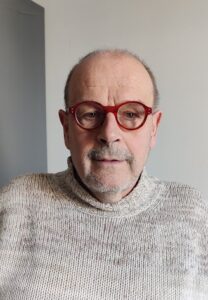
After some years at the Research Institute for European Affairs of the Vienna University of Economics and Business, the historian Roman Puff since 2010 works as a Senior Scientist at the University of Salzburg’s Department of Public Law, International- and European Law and the Salzburg Centre for EU Studies – SCEUS, where he teaches EU history in the EU-studies master programme. Building on rich trans- and interdisciplinary experience gained through years of close cooperation with economists, lawyers and political scientists in Vienna and Salzburg, he has conceptualised and organised numerous interdisciplinary projects with EU relevance. Those projects covered particularly the fields of history of European integration, external trade, and constitutional development of the EU of the European Union. He is currently the Executive Director of the Salzburg Centre of European Union Studies.

Klaudia Koxha
has completed her Bachelor’s Degree in Political Science at the University of Tirana and her Master’s Degree in Political Science at the University of Salzburg. Since 2020 she is part of the SCEUS Doctoral College, for which she was selected in an internationally competitive selection procedure. She writes her thesis on “Populism, political parties, and European integration in the Western Balkans.“ During the past years she has already contributed to research projects as a research assistant and is co-editor of the forthcoming book „Diverse Voices on Populism – New Accounts from the European ‚Periphery‘ (Nomos Publishing House).
Political Science Department/ University of Tirana
Klodiana Beshku (Coordinator)
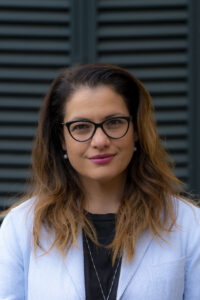
is a Lecturer at the Department of Political Sciences, Faculty of Social Sciences of the University of Tirana. She has conducted a post-doc as a Jean Monnet Fellow at the Robert Schuman Centre of Advanced Studies of the European University Institute during 2020-2021. She has received a PhD in Geopolitics from the University of Pisa and a M.A. Degree in European Studies from the University of Siena, Italy and the University Robert Schuman III of Strasbourg, France. She has held visiting research position at the School of Transnational Governance of the European University Institute. As a lecturer and visiting professor, she has taught academic and policy-oriented audiences in places such as University of Florence, University of Catania, University of Palermo, University Aleksandër Moisiu of Durrës, Albanian-American Development Foundation, Institute for Women in National and International Policies in Tirana, Institute for Philosophy and Social theory in Belgrade and the Centre of Excellence of the Ministry for Europe and Foreign Affairs of Albania. She has also held advisory positions for the Ministry for Europe and Foreign Affairs of Albania on the European Integration and the Western Balkans. Her research centres on European Integration and Enlargement, Geopolitics of the Western Balkans and Social Movements.
Orinda Malltezi
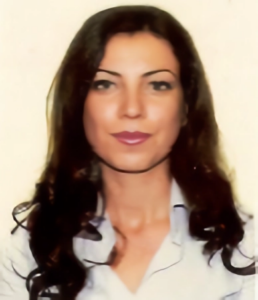
is a full-time lecturer at the Department of Political Science at the Faculty of Social Sciences, University of Tirana since 2004. She graduated in 2003 from the Eastern Mediterranean University, Cyprus, majoring in International Relations. She completed her Master studies during 2006-2008 in the field of „International Project Management“, Academy of Economic Studies in Bucharest, Romania. She completed her doctoral studies at the Department of Political Science, University of Tirana in 2015, with a focus on Albanian-Greek relations. Her areas of study are: international relations, international organizations, political culture as well as politics and policy analysis and evaluation. She is currently the coordinator of Joint Master PoSIG, and several courses in the Bachelor cycle related to International Relations module, such as: International Organizations, US Foreign Policy and at the Master level courses: Policy Assessments and Albania-Greece Relations.
Blendi Çeka
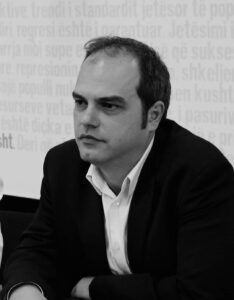
is Lecturer of Political Science, Faculty of Social Sciences – University of Tirana. He earned his University Diploma in Psychology, University of Tirana; a MSc in “EU Politics and Governance” with London School of Economics, and PhD in Election Systems in Albania, University of Tirana. His research interests cover political psychology, qualitative methods, election systems, political parties and electoral behaviour.

Shpendi Gashi
is an Assistant Lecturer of Geopolitics and Foreign Policy of USA, Faculty of Social Sciences – University of Tirana. He completed his studies in Political Science, University of Tirana and a MSc. in „Regional Political Studies“ at the University of Tirana. He has published a book in collaboration with another colleague on the Electoral Campaign 2021 in Albania, contracted to the „Campaign Observer“ Project of the European University of Tirana. He has also published analyses or editorials in foreign and local magazines. His field of study and scientific research extends to the aspect of international and geopolitical relations in the region and how these relations are reflected in the World Politics.